How Bad is AI for the Environment? Here’s How it Compares to Animal Agriculture
Never miss a beat in the movement to build a nature, climate and animal-friendly food system! Subscribe to our newsroom here.
Loading image...Concerned residents protested outside DTE Energy Headquarters in Detroit in late 2025 after the sudden announcement of a $7 billion data center development coming to their area - likely spurred on by rising investment in artificial intelligence (AI) across the country. Understandably so, the community worried about looming effects on their energy bills and water supply; this water and electricity hungry investment would provide little value to their community but significantly harm their surrounding environment.
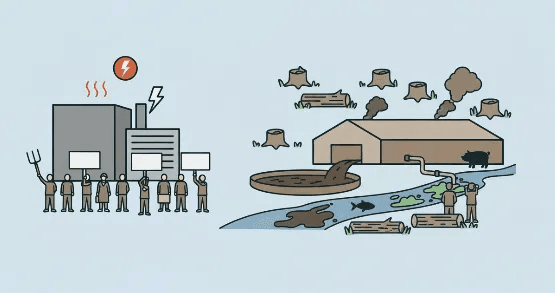
The unrest amongst Detroit’s citizens reflects a broader zeitgeist capturing the nation. However, for every liter of water used and cubic tonne of emissions the data center will inflict once constructed, a system even more damaging to the environment and to local communities’ health seems to be almost willingly overlooked by news outlets and the public: factory farming.
Despite engulfing more water and releasing more emissions than data centers and AI-infrastructure, industrial animal agriculture continuously gets a fraction of the attention for its role in worsening the climate crisis. The current public momentum against data centers is reasonable, but would that same anger not be better leveraged against a much greater and longstanding threat to local communities and the environment?
Pssst, before you continue, do you know if your bank is financing factory farming? Find out.
Pitchforks Rise For Data Centers and AI While Factory Farming Gets a Blind Eye
Data centers have been around since the widespread use of the internet took off, but a recent boom in AI investment has spurred many more with ever-greater computing power to be built. This hasn’t gone down quietly: 2025 saw a peak in the amount of protests against data center development across the United States, largely from residents living nearby proposed sites.
Residents fear that local energy bills will increase due to data centers requiring more electricity to run. It has also created fear around the use of coal to generate this electricity - from coal power plants that the country previously banked on being shut down. That means formerly anticipated emissions cuts will no longer be made.
One of the most hotly discussed issues with AI, however, is the amount of water needed to cool the data centers, which are performing increasingly complex computations as the technology becomes more widespread. Plans to build data centers in water scarce areas across the US are fueling the protests.
The reason for this is clear: drought-prone communities don’t like the idea of technology companies diverting the very water they rely upon for everyday life to a data center.
A Raindrop in a Waterfall: How Bad Is AI for the Environment Compared to Animal Agriculture?
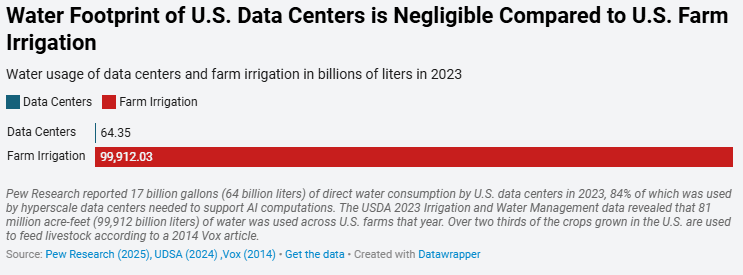
The exact water footprint of AI is challenging to determine because water is needed to both cool down equipment and to generate electricity. However, the most current figures for the water use of data centers housing AI-infrastructure are significantly overshadowed by the impact of industrial animal agriculture.
Intensive livestock production and data centers do not use resources the same way - data centers use a mix of water and electricity to keep their facilities cool enough to function. Using less water requires more electricity to be used, and vice versa. Amongst other reasons, this makes the water footprint of AI-infrastructure tough to pin down and variable by location. Estimates by the International Energy Agency put the 2023 water footprint of data centers at 560 billion liters of annual water consumption, while a 2024 study places the total indirect water use at “nearly 800 billion liters” in just the United States.
That’s a staggering amount, but next to factory farming it’s barely a drop in a waterfall.
Loading image...A 2020 study analysing global livestock production found that 4,387 trillion liters of water was needed to produce livestock feed annually - that places industrial animal agriculture as requiring nearly 8,000 times as much water as data centers under conservative estimates. In 2023 alone, U.S. farms used 99,912 billions of liters of water. More than two thirds of that water was used to produce livestock feed.
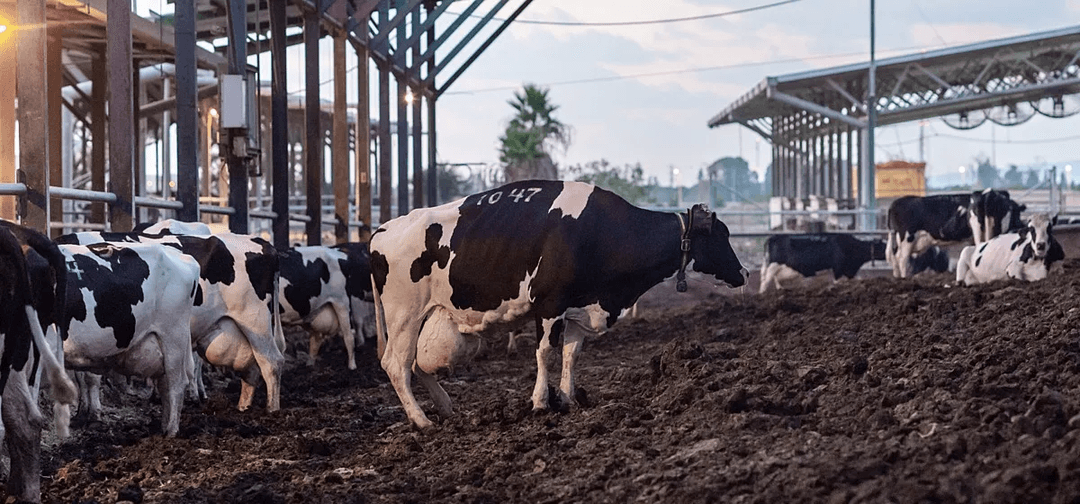
It’s clear that the attention on the intensifying data center water footprint lacks bite if not paired with greater scrutiny of agricultural practices that place amplify water stress on the world’s freshwater resources even more.
Loading image...From Draining Water and Engulfing Land to Unleashing Methane, Factory Farming is Relentless
Beyond water, 44% of the world’s habitable land is used for industrial animal agriculture or to grow the crops that support it. This is particularly devastating for rainforests - including the Amazon - where agriculture is responsible for at least 75% of its deforestation.
On top of that, the industry is a death sentence for many diverse aquatic ecosystems as immense levels of pollutants and waste run off into our rivers, lakes and oceans. Chemical fertilisers are used intensively to grow crops that feed farmed animals, and factory farms produce huge quantities of slurry.
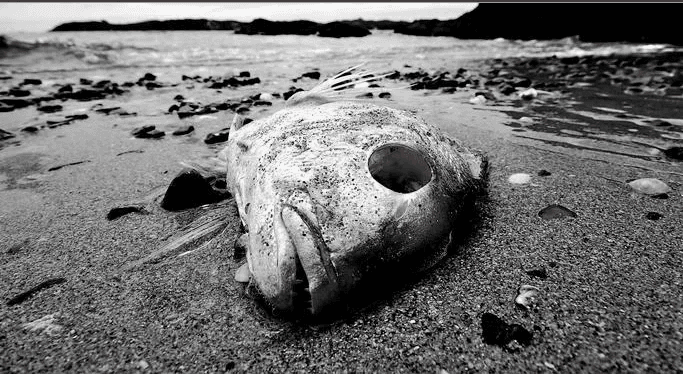
As this runs off and is way too frequently disposed of unsuitably, our waterways and groundwater are being destroyed, causing aquatic dead zones where oxygen levels drop to unliveable levels for the life that exists below water.
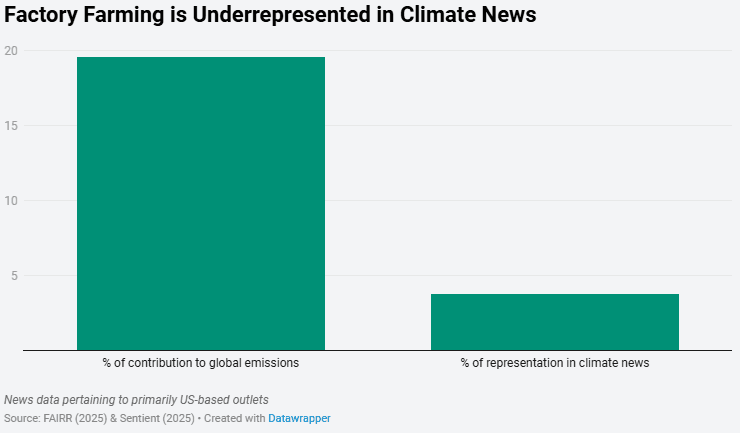
Loading image...Outside of land and water use, factory farming is estimated to contribute up to 19.6% of global greenhouse gas emissions every single year. To put that into perspective, the entire transportation sector - yes, that includes planes, trains and automobiles - is estimated to produce 15% of global greenhouse gas emissions.
This doesn’t cover the devastating effects of losing forests that would otherwise absorb excess carbon. What’s worse, almost half of these emissions are methane, which is over 28% more potent than carbon dioxide as a greenhouse gas.
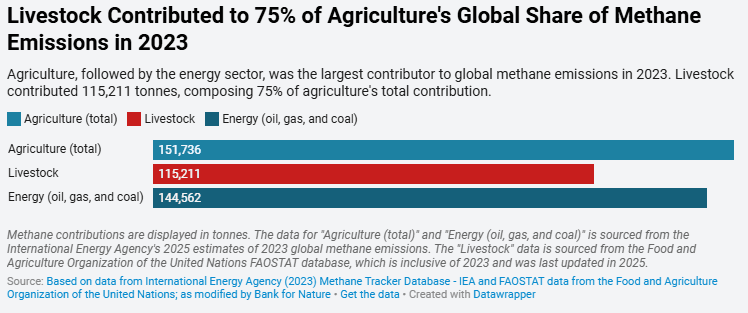
Agriculture was the number one contributor to global methane emissions in 2023, according to The International Energy Agency. Livestock made up 115,211 tonnes of this contribution, amounting to about three quarters of agriculture’s total emissions that year - only 29,351 tonnes less than the energy sector, which includes oil, gas, and coal.
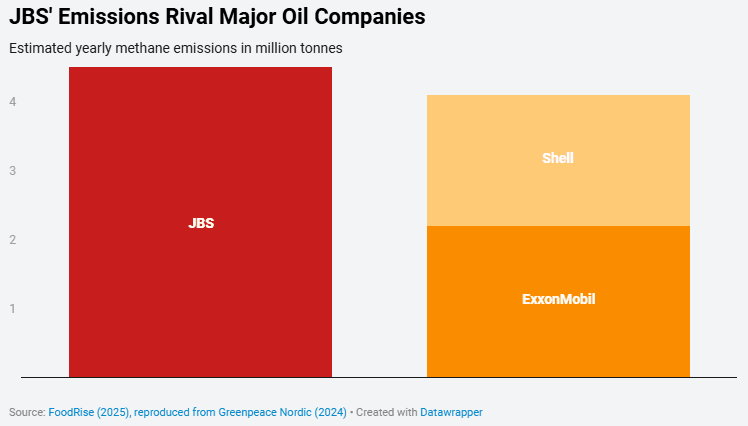
Loading image...Worried about the pollution created by fossil fuel giants? Well, the largest meat processing company in the world contributes more to methane emissions than two of the top oil companies. Yet, somehow, the issue of industrial animal agriculture is swept under the rug.
Loading image...Breaking Climate News: Tumbleweed Takes Centre Stage In Place of Animal Agriculture
If the Earth can shift away from its reliance on industrial animal agriculture over the next 15 years, it would get us more than halfway to our goal of keeping the Earth within 2 degrees Celsius above preindustrial levels. Yet, despite our critical need to shift away from the industry, industrial animal agriculture is barely spoken about in connection to its impact on the climate and our natural systems in major news outlets.
A 2025 analysis of climate stories published in U.S.-based news sources found that only 3.8% mentioned industrial animal agriculture in relation to its role in the climate crisis.
More frequent representation in the news would help strengthen public support and bring more political weight to the action of reducing our investment in factory farming. With this knowledge more widespread, people might just protest animal agriculture’s toll on our shared water resources and contributions to greenhouse gases in addition to data centers.
Loading image...Financing the Food Transition: The Low-Hanging Fruit for Banks to Decarbonise Their Portfolios
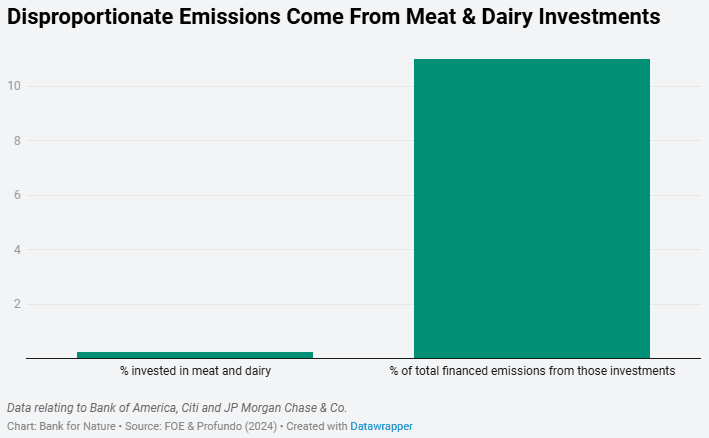
While factory farming makes up a small proportion of the portfolios of the three biggest banks in the U.S., it accounts for a hugely disproportionate amount of their emissions contributions.
According to a 2024 report by Friends of the Earth, total loans towards industrial animal agriculture make up about 0.25% of the largest banks’ portfolios yet contribute 11% of the emissions arising from their investments - meaning the emissions footprint is 44 times larger than the investment itself.
This also presents a huge opportunity for banks to easily reduce their financed emissions; even a small reduction in their loans factory farming - such as a decrease of 0.1 percent - would reduce their overall financed emissions by 4.4 percent. This divestment from industrial animal agriculture could also encourage land preservation rather than deforestation, improving biodiversity and carbon sequestration.
Loading image...Increasing investment to accelerate the transition to plant-rich food systems is also a huge opportunity to increase the return rate of decreasing carbon emissions even further - five times greater than investments in renewables and four times greater than investment in electric vehicles.
So while it is true that data center demand for electricity and water is expected to rise significantly over the next few years, the impact of cutting out these investments is likely to be negligible compared to factory farming and its intense water and emissions footprint.
You Have the Power to Influence This Very Change: Email Your Bank via Bank for Nature
Is your bank investing in industrial animal agriculture? Find out, and send them a message here to support the necessary pushback against extractive water practices and unfettered greenhouse gas emissions.
Follow Bank for Nature on Instagram, LinkedIn and Substack to help us drive this critical change and stay up to date on news at the cross-section of nature, finance and factory farming.
Want more research like this?
Subscribe to the only source dedicated to factory farm finance!