Following the Money in March 2026: Nature, Food Transition & Factory Farm Finance
We know, we know, it’s no longer March, but we just couldn’t miss it! The month brought encouraging signs that banks are taking nature more seriously, with some significant market signals, albeit with a number of murky undertones and persistent challenges.
This Month in Brief
🐔 Tyson is leaning on factory farming chickens to plug up to $600m in beef losses – red meat is looking increasingly shaky as a reliable profit centre.
🌪️ Insurers are getting nervous about livestock as extreme weather bites, making factory farming harder and more expensive to insure.
🐖 A disease outbreak in Spain crashed EU pork prices, showing how one biosecurity slip can upend an entire export‑dependent sector.
🌱 Plant-based investments jumped 39% to $450m, with capital rotating toward lower‑capex, nearer‑term transition bets.
🧫 Fermentation tech keeps attracting funding even as food‑tech VC falls, with money chasing B2B “picks and shovels” rather than splashy brands.
🌳 Bank of America has tightened deforestation rules for beef and soy – it’s still a major factory-farm financier, but this is a sign that cheap capital for deforestation is under pressure.
⚖️ And the UN reminds us the system is still upside down: for every $1 into nature‑friendly projects, $30 goes to nature‑harming activities – including industrial livestock.
Before, we jump in…
Can you help us put German banks in the spotlight?
We’re very happy to share that we’ll soon expand our bank coverage to Germany! It’s home to some of Europe’s largest retail and cooperative banks, and that means that those banks deserve much closer scrutiny and it’s citizens deserve the right to have their say!
But we need your help to make our German launch land with a splash! What do we want from you? Not much, you’ll be glad to hear -we just want to get in touch with people and organisations that can help us to promote this launch in Germany.
So drop us a message if you, or someone you know, work in or with:
A Charity or NGO that may be interested in our work on factory farm finance.
German media or journalism - be that mainstream media or mission-focussed.
Influential or high-profile individuals
Social media influencers – particular where they are mission-aligned.
Every introduction counts! We look forward to sharing more with you soon, but if you’re keen to help us with this work or have a burning interest then always feel free to reach out!
📩 Get in touch: hello@bankfornature.org
Here we go - the Biggest Headlines in March!
Factory Farm Finance
Standard Chartered closes $435M ‘responsible farming’ loan
Standard Chartered completed a $435 million loan that rewards responsible farming in South America. The better companies do on environmental standards, the lower the interest they pay - intended to incentivise agribusinesses to protect forests and land rights.
CoBank rewards farmers for hitting environmental goals
CoBank is giving farmers better interest rates when they meet water quality and environmental targets. This approach could become the new normal, but the jury is out on whether it will truly transform our food systems to sufficiently address the climate and nature crises.
Major investors are assessing fast-food chains on antibiotic use
A group of 43 investors managing $8.9 trillion assessed how 12 big fast-food chains handle antibiotics in their meat supply. The data is intended to identify which major restaurants they should influence with their share ownership.
Tyson shareholders push for better worker protections
Faith-based investors filed a proposal at Tyson’s annual general meeting highlighting how poor labour practices and changing immigration rules create real business risks.
Plant-Based Finance
Plant-based investments jumped 39% to $450M
New data shows plant-based investments grew significantly in 2025, even as other food-tech areas struggled. Investors are picking winners more carefully, favouring proven plant-based options over expensive lab-grown meat.
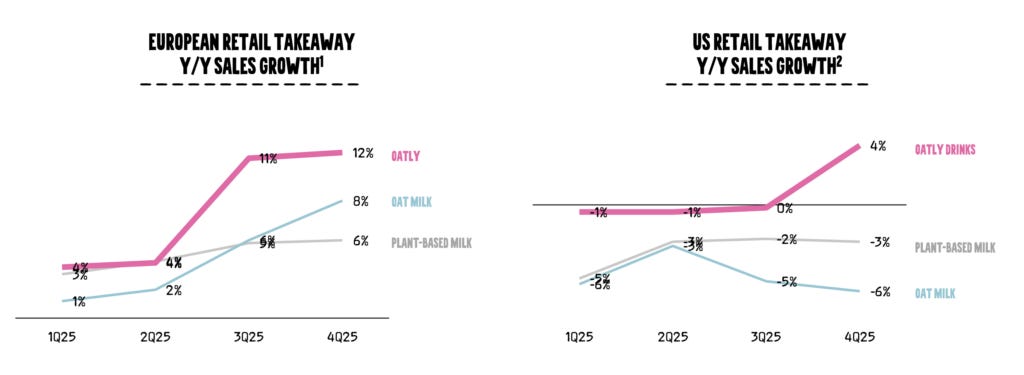
Oatly turns a profit for the first time
Oatly made $862.5M in 2025 and became profitable as a public company. This is a big win despite losing a UK court case about calling their product “milk,” and could signal a brighter future for the plant-based sector.
Fermentation tech attracts investment despite slowdown
While overall food-tech funding dropped nearly 50%, fermentation start-ups (which use microbes to make proteins) kept investor interest. Money is moving toward behind-the-scenes ingredient companies rather than consumer brands.
Beyond Meat hits accounting snags
Beyond Meat delayed its annual report to sort out inventory accounting problems. The company continues facing tough financial challenges as it works to scale up.
Planta restaurant chain shuts down
The plant-based restaurant chain Planta couldn’t find new funding and closed all 17 locations. The economic climate remains tough for plant-based restaurants.
Nature, Deforestation & Policy
Europe’s central bank says nature loss drives inflation
The European Central Bank explained how damaging ecosystems raises food prices and creates risks for banks that lend to farms. Central banks taking more action on nature could send a strong market signal for retail banks to do the same.
UN report shows way more money flowing to nature-harmful projects than friendly
The UN revealed that for every $1 going toward nature-friendly projects, $30 goes toward harmful ones. Their new framework shows we need to cut funding for destructive farming while boosting nature solutions and that these need to happen at the same time, not one after the other.
Bank of America tightens financing rules which could impact factory farm finance
After pressure from investors, Bank of America now requires beef and soy companies to prove they’re not destroying forests before getting loans. Though still a leading financier of factory farming, bigger US banks setting stricter rules can have significant influence in the market.
Groups pressure USDA to stop subsidising factory farms with taxpayer money
Over 30 organizations asked USDA to stop giving taxpayer money to factory farms for manure digesters, which mostly help big industrial operations while pollution continues. Making corporations pay their own environmental costs could support the food transition by making the comparative costs of plant-based vs. animal-based products fairer for consumers.
EU forest protection law delayed until December
The EU’s deforestation rules got pushed back, giving companies more time to prepare. But the delay creates risks, especially for the UK, which might become a backdoor for products linked to forest destruction.
Florida keeps ban on lab-grown meat
A federal court upheld Florida’s ban on cultivated meat. With different states making different rules, it’s harder for new food technologies to scale up in the US. This is an attack on consumers’ freedom to choose and protects established corporation from increased market competition.
Markets & Commodities
Tyson betting on factory farmed chickens to make up for beef losses
Tyson expects to make up to $2.3 billion this year, but only if chicken sales cover losses of up to $600 million in beef. Beef production has become much less stable financially.
Bird flu drives the price of chickens up and down
Disease outbreaks in chicken breeding flocks are creating supply uncertainty and pushing up prices.
Spanish pig disease outbreak crashes EU pork prices
A disease outbreak in Spain sent EU pig prices to their lowest point since early 2022 after Asian countries stopped buying. One biosecurity failure can tank an entire market.
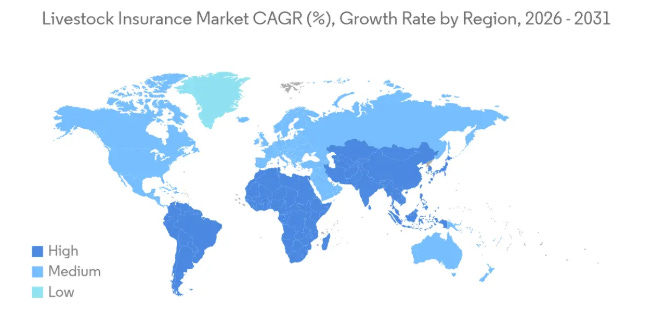
Farmed animal insurance getting harder to find and afford
A new report shows how extreme weather is making insurers nervous about covering livestock. As insurance gets more expensive or unavailable, factory farming becomes financially riskier.
Fertilizer prices jump before planting season
Global tensions pushed fertilizer costs up right before spring planting. Higher fertilizer prices mean more expensive animal feed, which squeezes livestock farm profits and makes loans riskier.
Corn price rises impact feed costs for factory farm corporations
Rising oil prices made corn more expensive (because it’s used for ethanol fuel), which raised the cost of feeding cattle.
New Research & Studies
Kicking Away the Green Ladder – LSE Grantham Institute
This paper finds that nature loss raises borrowing costs for governments, particularly poorer nature-dependent economies. That means nature degradation driven by factory farming may already drive significant indirect costs for governments, and therefore the taxpayer.
US tracks antibiotic risks in farm animals – USDA, March 16, 2026
The USDA is tracking antibiotic use on farms more carefully, which could lead to stricter rules that increase costs for intensive farmed animal operations.
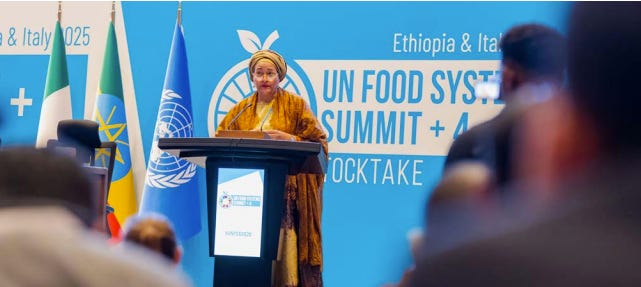
UN strategy for funding better food systems – UN Food Systems Coordination Hub, January 2026
The UN’s new plan focuses on getting private investors to fund food system changes, especially for small businesses and plant-based companies.
How to finance lower-emission dairy farming – Wageningen University, March 11, 2026
Research shows how loans with better interest rates and subsidies can encourage dairy farmers to cut emissions, however there is serious concern amongst investors that companies may make false environmental claims and that it is insufficient compared to a necessary transition to plant-forward food systems.
Thanks for Reading!
March showed a solid amount of progress in the fight for a nature-friendly financial system - the tide is turning and it’s clear that it’s no longer just campaigners talking about this. That’s not to say our work is over - many major banks are still pumping billions into factory farming with no regard for the long-term health of the planet.
But central banks, the UN, and major investors are increasing asking not if agricultural finance needs to change, but how quickly.
Your bank’s choices matter. Banks that keep financing factory farming without environmental conditions are taking risks that regulators and investors are finally starting to take seriously.
It’s free to subscribe to our monthly newsletter and get updates straight to your inbox! Sign up below.
Got tips, research, or banks you’d like us to look into? Send them to: hello@bankfornature.org
Want more research like this?
Subscribe to the only source dedicated to factory farm finance!